
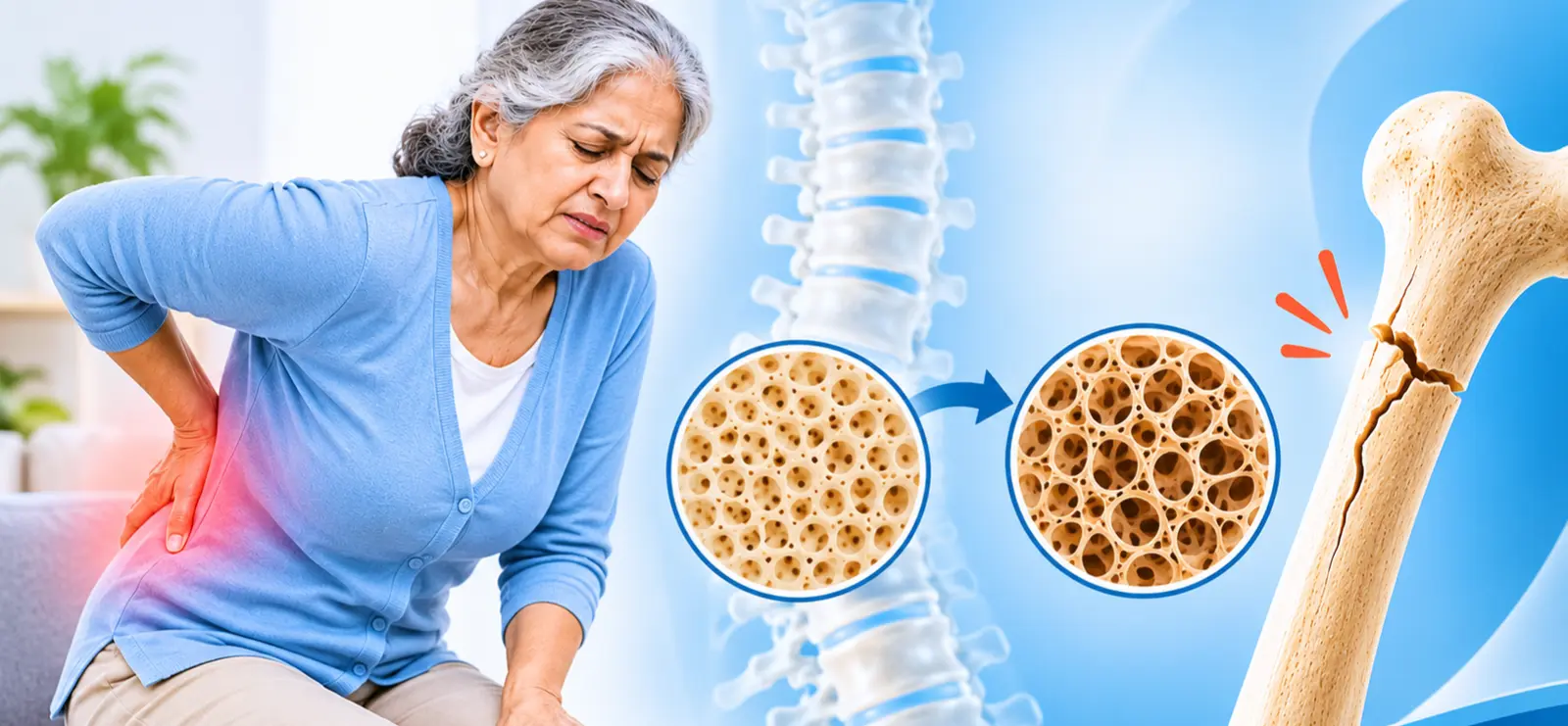
Osteoporosis is a condition that makes bones weak, brittle, and more likely to fracture. It often develops silently, without noticeable symptoms, until a fracture occurs. Ageing, calcium deficiency, vitamin D deficiency, hormonal changes, and lack of physical activity can increase the risk. Regular exercise, balanced nutrition, and early bone health assessments help protect your bones. Consulting an experienced Orthopaedic in Whitefield can help identify bone loss early and guide appropriate treatment. Don’t ignore persistent back pain, reduced height, or frequent fractures. Strong bones today support a healthier and more active tomorrow!
Dr. Madan Temker explains how osteoporosis gradually weakens bones, its common risk factors, and why early diagnosis is important. If you are experiencing bone pain, frequent fractures, or concerns about bone density, consult an experienced Orthopaedic Surgeon in Whitefield for professional guidance.
Conclusion
Osteoporosis may develop silently, but its impact on bone health can be significant. Recognising risk factors, maintaining a calcium-rich diet, getting sufficient vitamin D, and staying physically active can help protect your bones. Early diagnosis and appropriate treatment can reduce fracture risks and improve quality of life. He also highlights preventive measures, healthy lifestyle habits, and available treatment options to maintain stronger bones. Consulting an experienced Orthopaedic in Whitefield can help you receive an accurate diagnosis and appropriate treatment. Choose timely care to keep your bones healthy and strong.
FAQ’s
1. What is osteoporosis?
Osteoporosis is a bone condition that reduces bone density, making bones fragile and increasing the risk of fractures.
2. What are the early signs of osteoporosis?
Osteoporosis often has no early symptoms. Back pain, height loss, and unexpected fractures may indicate weakened bones.
3. Who is most at risk of osteoporosis?
Older adults, postmenopausal women, people with low calcium intake, and individuals with sedentary lifestyles face increased osteoporosis risk.
4. Can osteoporosis affect younger people?
Yes, younger people can develop osteoporosis due to nutritional deficiencies, hormonal conditions, certain medications, or underlying medical problems.
5. Does calcium help prevent osteoporosis?
Calcium supports bone strength and helps maintain bone density, especially when combined with adequate vitamin D and regular exercise.